A bow saw and a folding saw both cut wood, but they are built for different trips. A bow saw is a light metal frame holding a long blade under tension, and it eats through firewood rounds. A folding saw is a fixed blade that folds into its own handle, small enough to forget in a pocket until you need it. Buy the wrong one and you either haul a frame you never fill or fight a small blade through logs it was never meant for. This is how to pick the right one the first time.
What each saw actually is
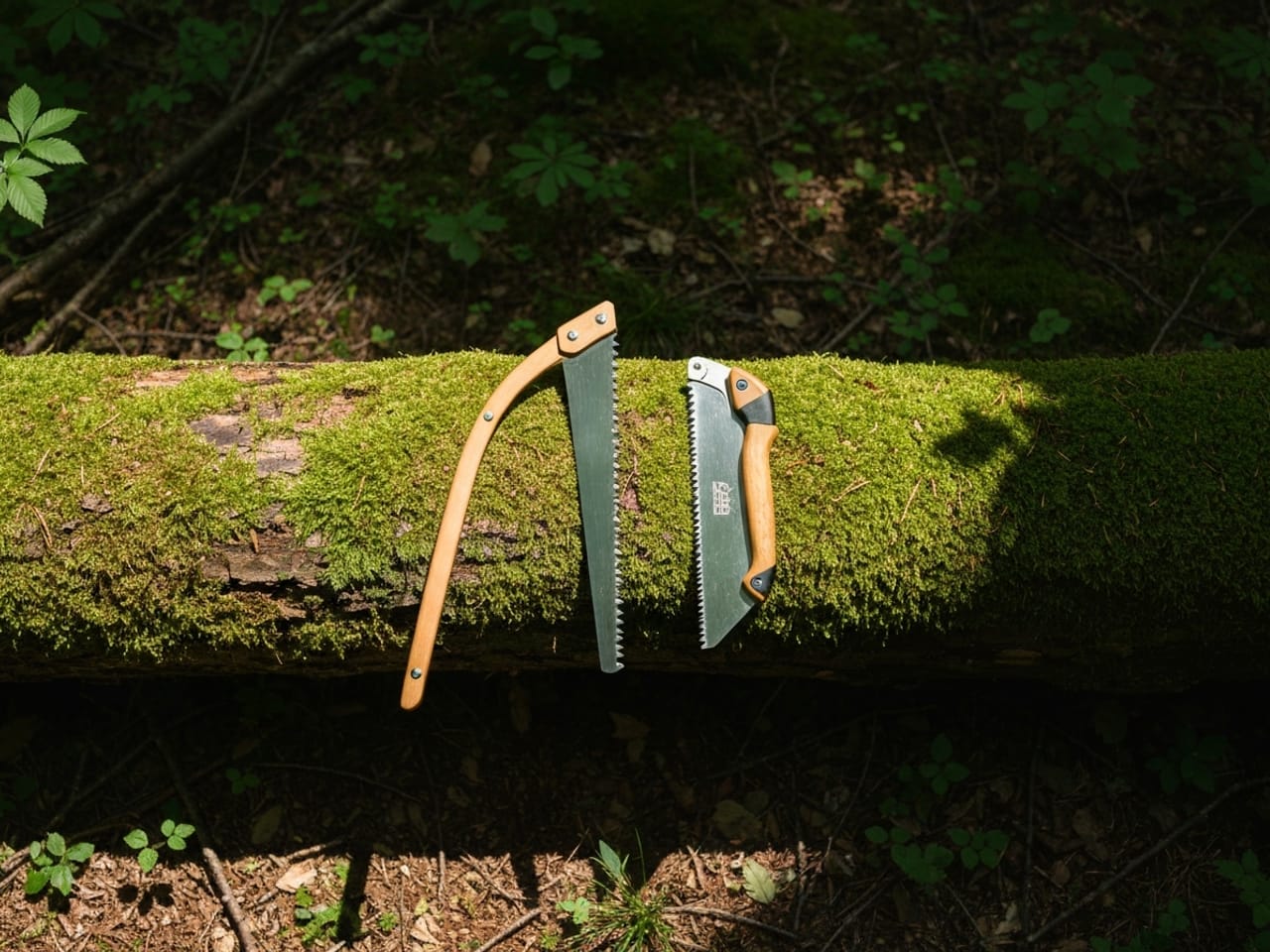
A bow saw is a bent tube or flat bar of metal, usually aluminum or steel, that holds a replaceable blade taut between two ends. The tension is what makes it cut: a thin blade pulled tight tracks straight and does not flex or bind. Blades run from short 21 inch travel models up to 30 inch loppers. The Agawa Boreal21 is the packable end of the category: the frame folds flat and the whole thing weighs under a pound, which is why it shows up in packs where a full hardware-store bow saw never would.
A folding saw is simpler. One blade, one handle, a pivot and a lock. The blade folds into the handle like a large pocketknife, so there is nothing to assemble and nothing to lose. The Bahco Laplander and the Silky Gomboy are the two names most people land on. The Laplander is a rugged, low-cost all-rounder with a 7.5 inch blade. The Silky line uses harder, thinner Japanese steel that cuts noticeably faster on green wood and comes in several blade lengths.
A bow saw is a firewood machine you have to carry a frame for. A folding saw is a pocket tool that will process most of a normal campsite.
Cutting speed on rounds vs branches
This is where the two split hardest, and it depends entirely on what you are cutting.
- Firewood rounds and thick logs. A bow saw wins, and it is not close. The long blade takes a full stroke, so each pass removes more wood, and the frame keeps the blade dead straight through a fat log. Bucking a downed limb into stove-length rounds is a bow saw job. A folding saw will do it, but you make many more strokes and you feel every one by the third round.
- Branches and limbing. A folding saw wins on anything wrist-thick or smaller. It gets into tight forks a bow saw frame cannot reach, and for a handful of cuts you are done before you would have finished unfolding a frame. Clearing a tent site, trimming a pole, or cutting a few kindling lengths is folding saw work.
The honest summary: if most of your cutting is turning logs into firewood, the bow saw pays for the bulk it adds. If most of your cutting is branches, poles, and the odd small log, the folding saw does the job with a fraction of the weight. If you are trying to sort out how the wood fits your fire in the first place, our how to build a campfire guide covers the fuel ladder from kindling up.
Packability and weight
A folding saw is the easier thing to carry, full stop. A Bahco Laplander is around 7 to 8 ounces and folds to the size of a large multitool. It rides in a jacket pocket or a side pouch and you forget it is there. There is no frame to snag and nothing to store the blade in, because the handle is the blade guard.
A bow saw asks more of your pack even at the packable end. A folding model like the Boreal21 collapses flat, but it is still a foot-plus of frame, and a rigid hardware-store bow saw does not pack at all in a rucksack. The tradeoff is real: the frame you carry is what lets the long blade cut so fast. For a canoe trip or a base camp where weight matters less and you are cutting a lot of firewood, that frame earns its place. For a day hike or a fast overnight, it usually does not.
Blade replacement and cost
Both use replaceable blades, and this matters more than the sticker price. A saw blade is a wear item. It dulls, and on cheaper folding saws you cannot always resharpen the hardened teeth, so you swap the blade instead.
- Bow saw blades are cheap and everywhere. A spare bow saw blade costs a few dollars at any hardware store, and most frames take a standard length. If you cut a lot of wood, you will go through blades, and this is the category where that is painless.
- Folding saw blades cost more and are brand-specific. A Silky replacement blade is not a hardware-store part, and it costs several times what a bow saw blade does. The upside is the Silky steel lasts and cuts fast while it does. Bahco blades sit in between: cheaper than Silky, still a specific part.
Neither is expensive to keep running. Just know that a bow saw is the lower running cost if you are burning through blades, and a folding saw asks you to buy the right blade for your specific model.
Safety and durability
A folding saw is the safer tool to carry and the one more likely to survive a drop. The blade folds away, so nothing is exposed in your pack, and there is very little to break: a pivot and a lock. Check that the lock is solid before every cut, because a blade that folds on your fingers mid-stroke is the main way these hurt people. The Laplander and the Silky both have a positive lock in the open position.
A bow saw exposes a long toothed blade the whole time it is assembled, which is why the packable ones fold or come apart for transport. In use it is stable and predictable because the frame holds the blade straight, but you keep your free hand off the top of the log and out of the blade's path. On durability, a bow saw frame is hard to kill; the blade is the part that wears. A folding saw's weak point is the pivot and lock, and a cheap one can develop play over time. A well-built one from either brand outlasts years of normal use.
Pick a bow saw if, pick a folding saw if
Here is the decision, stripped down.
- Pick a bow saw if you cut firewood in volume, you camp from a car, canoe, or base camp where a bit of extra bulk is fine, and speed through thick rounds matters more than pocket size. You want the fastest cheap cutting on logs. Start with the best bow saw guide.
- Pick a folding saw if you backpack, travel light, or mostly cut branches, poles, and small wood, and you want a tool that disappears into a pocket with no setup. For camping picks see the best folding saw for camping guide, or for harder bushcraft use the best folding saw for bushcraft guide.
If you can only own one saw and you are not sure, get a good folding saw. It covers more of what a normal camper actually does, and it is the one you will carry instead of leaving at home. Move up to a bow saw when you find yourself wishing you had one, which happens the day you are bucking a big downed limb into a weekend's firewood. Once the wood is cut, our campfire cooking for beginners guide picks up where the saw leaves off. You can also browse everything filed under saws.
Affiliate disclosure: Some links in this article are affiliate links. Commission earned at no extra cost to you. Read our methodology.