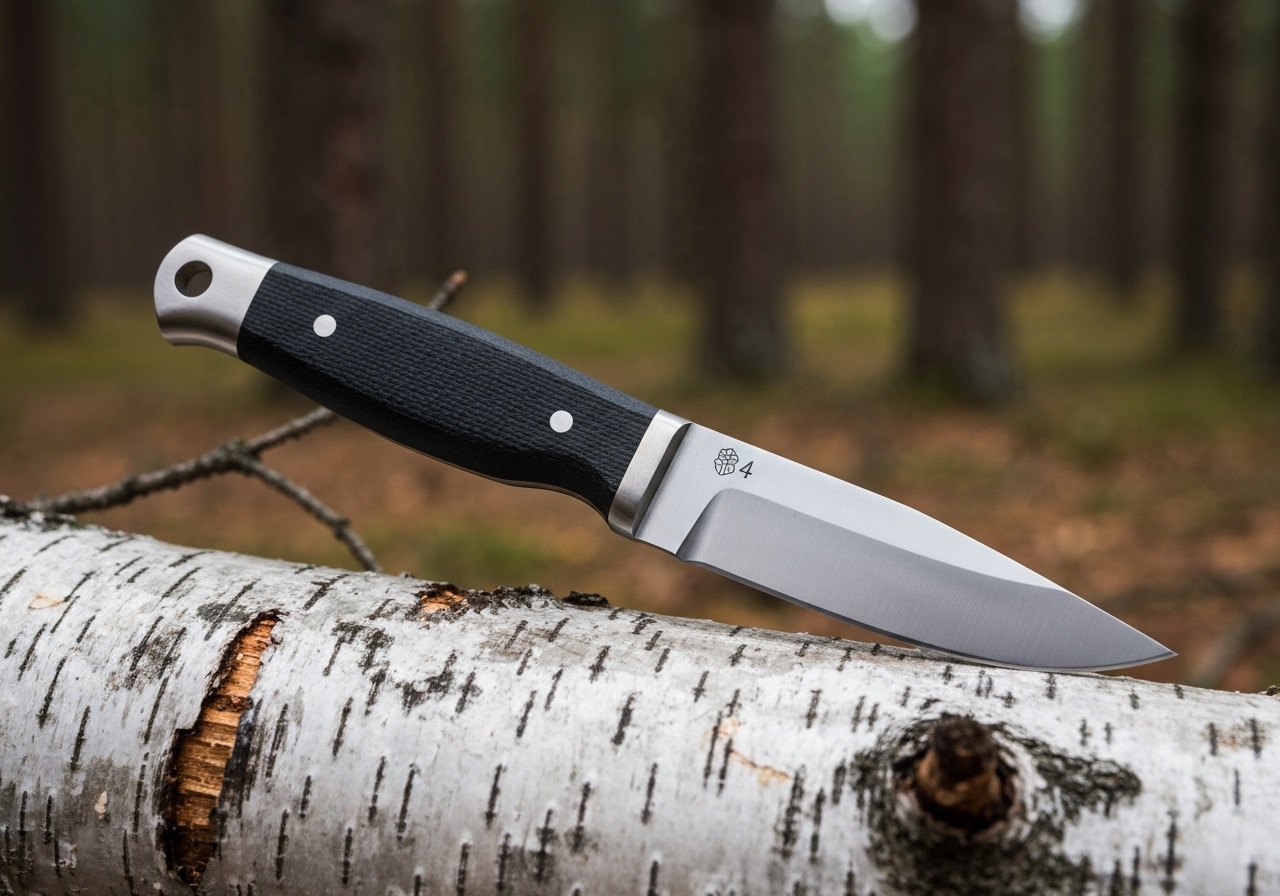
The Morakniv Garberg is the knife you reach for once a partial-tang Mora stops feeling like enough. It costs around $109, made in Sweden, and it keeps the familiar 14C28N scandi blade while adding the one thing budget Moras leave out: a tang that runs the full length of the handle and ends in an exposed steel pommel. That single change is the whole story.
Who it's for
The Garberg is for the Mora user who has already learned what a scandi grind feels like and now wants to baton large rounds without thinking about the handle coming apart. It suits people who treat one knife as their main wood-processing tool, and who would rather pay once for a full tang than upgrade twice. If you are still buying your first fixed blade, this is more knife than you need yet, and the beginner knife guide points to cheaper starting points. If you want to see where it lands among everything we rate, the best bushcraft knives guide places it in the full field.
How we assessed
This assessment is based on Morakniv's published specifications, independent data on 14C28N steel, and analysis of user reviews and field reports across several platforms. The Garberg has been on the market since 2016 and has a deep, consistent record to draw on. We do not claim personal field testing here, and we do not invent test-hour numbers. See our methodology for how we weigh specs, owner feedback, and long-term reports.
In the field
The blade and tang
The 4.3-inch blade is 3.2mm thick at the spine, the same stock as the Bushcraft Black, but the steel now carries through a full tang to an exposed pommel at the rear. That is what separates the Garberg from every cheaper Mora. Where a partial-tang knife asks you to be careful about how hard you baton, the Garberg invites it. Owners consistently describe driving it through seasoned hardwood rounds that would make a Companion owner wince. The pommel also takes hammer taps and pry-adjacent abuse that a glued-in rat-tail tang cannot.
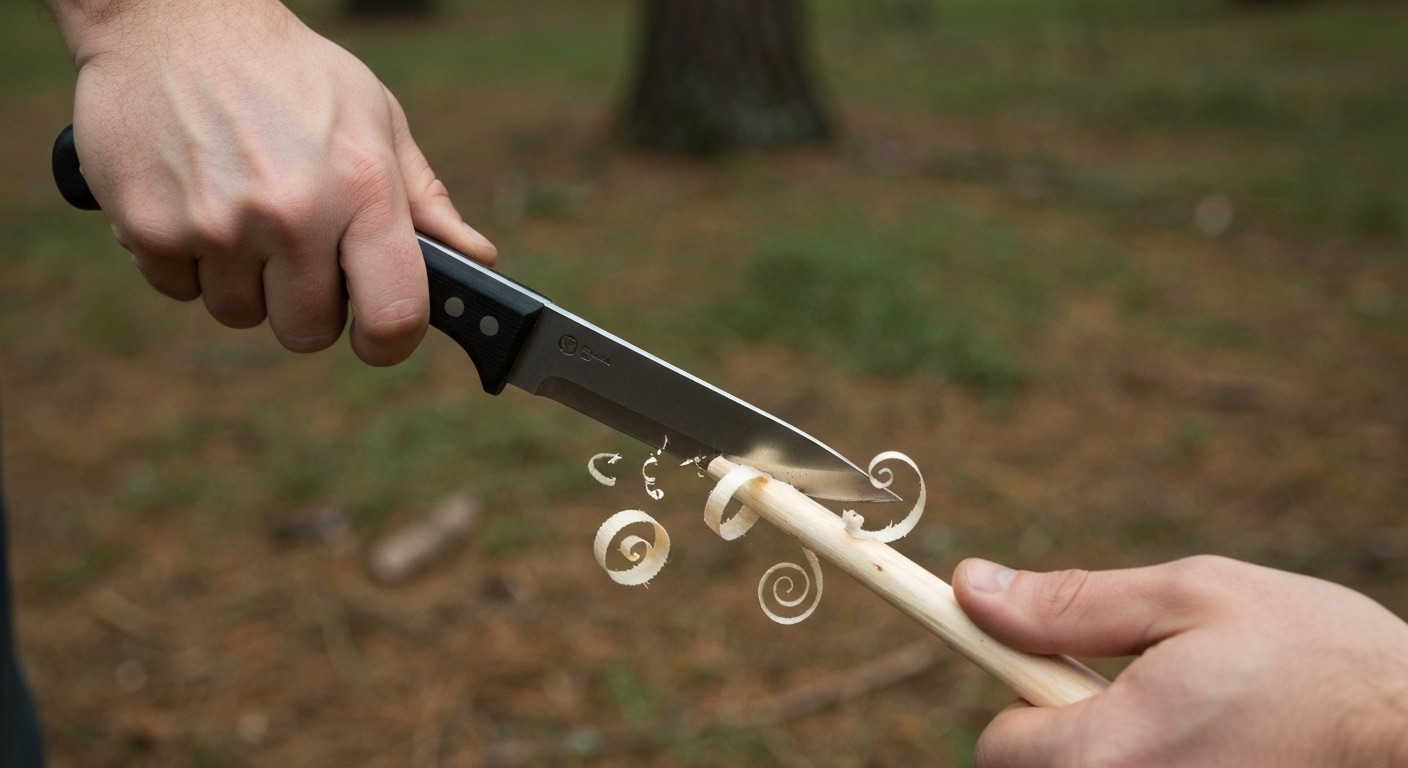
The grind is the familiar scandi: a single high primary bevel running flat to the edge, no secondary. It sharpens the same way every Mora does, flat on a stone with the bevel laid down, and it self-guides so you need no angle skill. The 14C28N stainless sits at around 58 HRC. It holds a working edge through normal field tasks and shrugs off rust when stored damp, though a small number of owners report a softer-than-expected factory edge that benefits from a strop before first use.
The spine and ferro rod
The spine is ground square on purpose. Lay it against a ferro rod and it throws a clean shower of sparks with no extra filing, which is not something you can take for granted on a stock knife. This is the same square-spine logic the Morakniv Bushcraft Black uses, carried onto a full-tang frame.
The handle and sheath
The polyamide handle wears a traditional Dala pattern and a real finger guard, and it is more squared and substantial than the slim Companion grip. It fills a larger hand well and stays secure when wet, at the cost of some of the slim comfort smaller Moras have for fine carving. The Garberg ships with a sturdy multi-mount polymer sheath that clips, straps, and MOLLE-mounts almost anywhere; a leather-sheath version is sold for buyers who prefer a traditional belt carry.
Compared to alternatives
vs. Morakniv Companion (~$22): The Companion is lighter, cheaper, and thinner, and for most beginner tasks it does the same work. What it cannot do is take repeated heavy batoning without stressing its partial tang. The Garberg exists for exactly that gap. If you do not baton hard, the Companion is the smarter spend, and our Morakniv Companion review lays out why.
vs. Morakniv Bushcraft Black (~$35): Same steel, same grind, same 3.2mm spine, and a good sheath. The difference is the tang. The Bushcraft Black is partial tang; the Garberg is full tang with an exposed pommel. If your batoning is occasional, the Bushcraft Black saves you real money. If it is routine and aggressive, the Garberg is the one built for it. Full breakdown in the Morakniv Bushcraft Black review.
vs. ESEE-4 (~$130): The ESEE-4 is full tang in 1095 carbon steel with a thicker, more robust blade and a famous no-questions warranty. It is tougher still and built like a pry bar with an edge. It is also pricier, heavier in the hand, and uses a flat-ground edge that asks more of your sharpening. The Garberg gives you most of the full-tang toughness with the easier scandi sharpening system and a lower price.
Should you buy it?
Yes, if you have outgrown partial-tang Moras and want one knife that batons hard without complaint. The Garberg is the Mora to buy when the failure mode you worry about is the handle, not the edge. It keeps everything that makes Moras easy to live with and removes the one ceiling cheaper models hit.
Skip it if you want the lightest knife you can carry, or if you are buying your first fixed blade and want the cheapest competent entry. For those, the Companion at around $22 is the right call. For everyone who batons large rounds and wants to stop thinking about the tang, the Garberg earns its price.
Affiliate disclosure: Links to retailers in this review are affiliate links, if you buy through them we may earn a small commission, at no extra cost to you. Affiliate revenue does not influence our rating. Read our methodology.