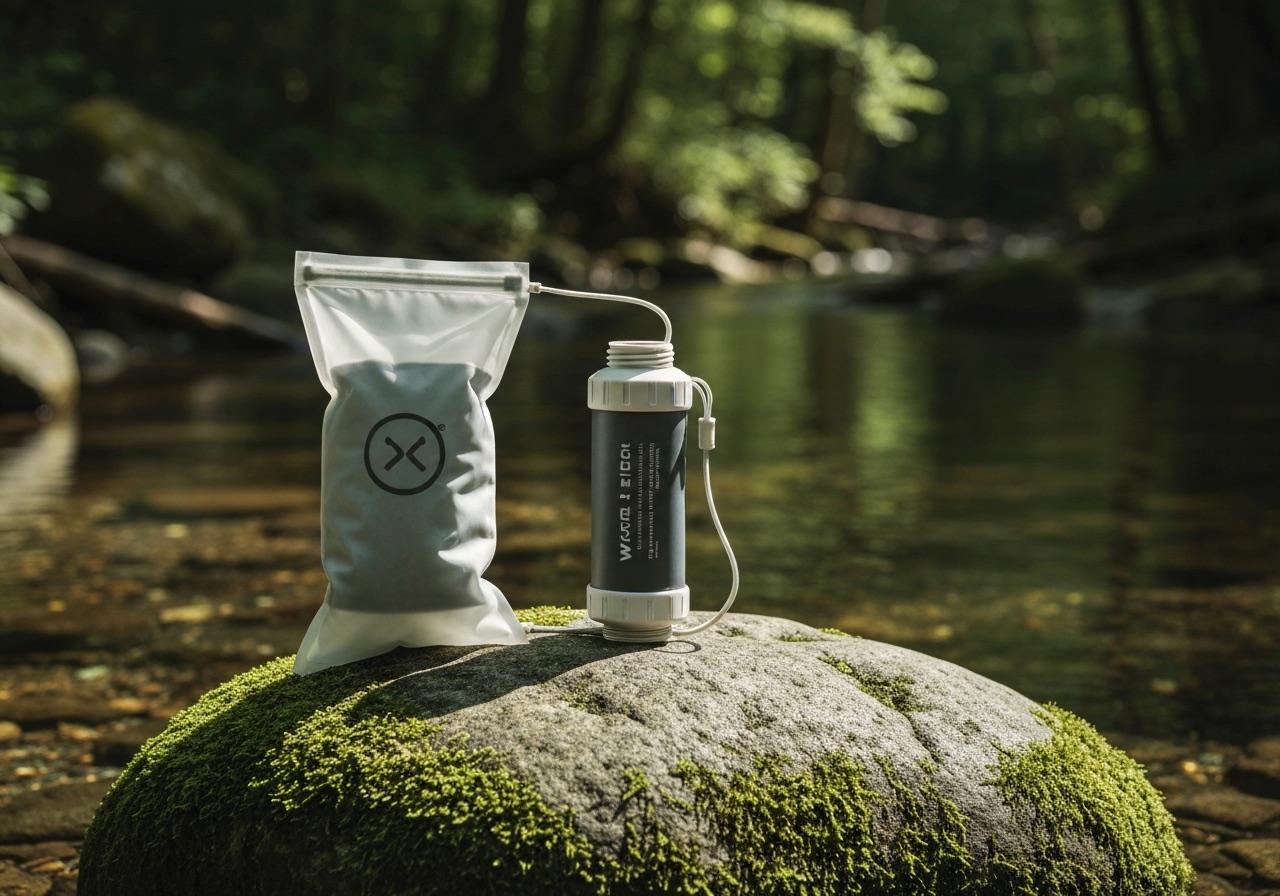
The Sawyer Squeeze (SP129) is a three-ounce hollow-fiber water filter that became the standard answer for lightweight backcountry water. The reason is plain: a 0.1 micron membrane removes bacteria and protozoa at backcountry-grade levels, it threads onto bottles you already carry, and it costs about $39. It does have one rule you cannot break, and we cover it below.
Who it's for
The Squeeze suits anyone drawing water from streams, lakes, and springs on bushcraft and backpacking trips: beginners assembling a first kit, and experienced hands who want one reliable filter that disappears into a pack. It is right for clear-to-moderately-silty North American and European backcountry sources, where bacteria and protozoa are the real threat. It is not the tool for water that may carry viruses, which the hollow-fiber membrane does not remove.
If you are still deciding which filter style fits your trips, our best water filter for bushcraft guide places the Squeeze against gravity, pump, and straw options. For first-timers, it slots into the bushcraft starter kit as the water-treatment piece.
How we assessed
This assessment draws on Sawyer's published specifications, the SP129 manual, independent lab claims for the 0.1 micron hollow-fiber membrane, and analysis of a large body of user reviews and long-trail field reports. The Squeeze has been on the market for years and has an unusually deep, consistent data set. We do not claim personal field testing here. See our methodology.
In the field
What it does and does not remove
The membrane is rated to 0.1 micron absolute, which Sawyer states removes 99.99999% of bacteria such as E. coli and salmonella, and 99.9999% of protozoa including giardia and cryptosporidium. For the water most bushcrafters actually drink, that is the full set of relevant biological threats. The hard limit is viruses: they are smaller than 0.1 micron, so the Squeeze does not remove them. In most temperate backcountry that is an acceptable trade. In areas with poor sanitation or known viral contamination, you need chemical treatment or a purifier instead. This is a filter, not a purifier, and the distinction matters.
Flow rate and backflushing
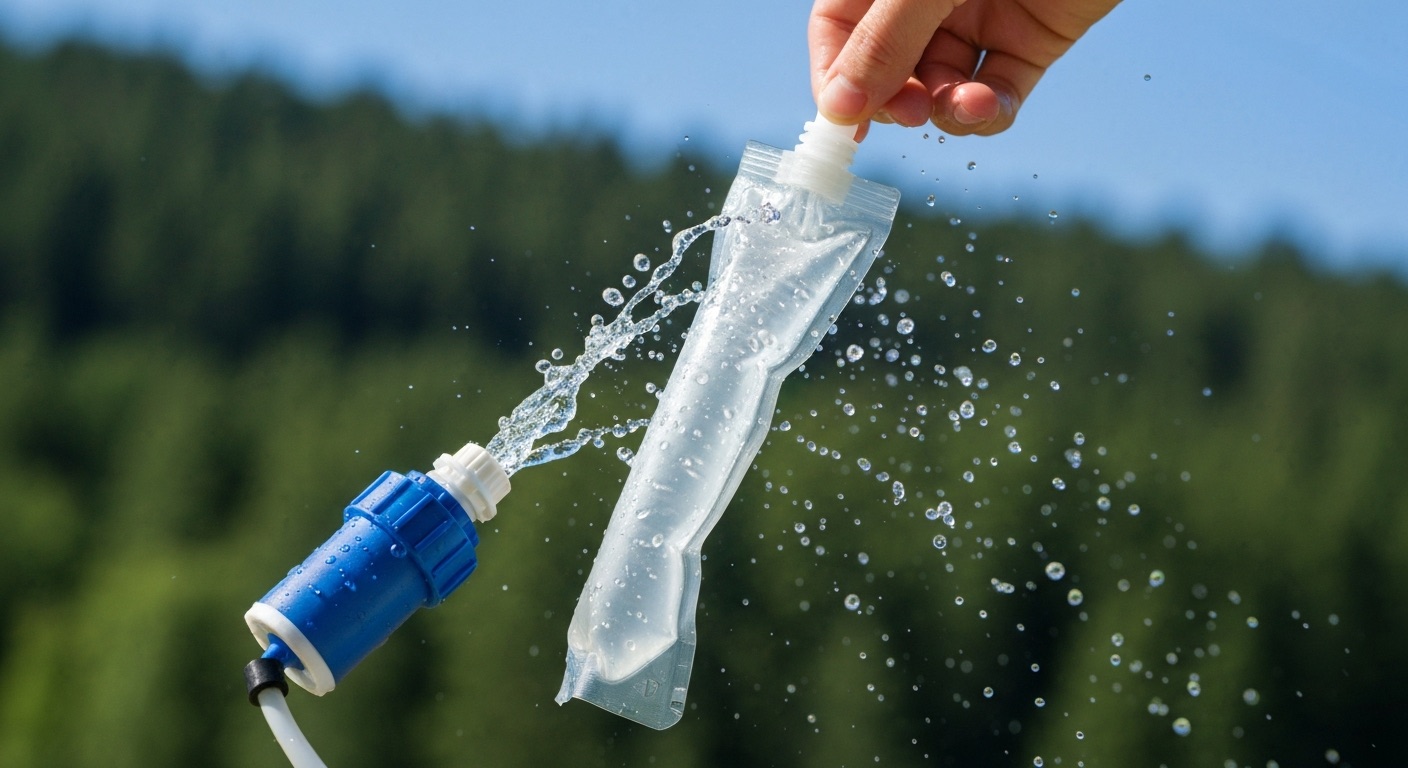
New, the Squeeze flows up to about 1.7 litres per minute under hand pressure, which is quick for a filter this small. Flow drops as the membrane loads with sediment, and silty water slows it noticeably. The fix is the included backflush syringe: force clean water back through the filter and most of the flow returns. Users who skip this end up with a filter trickling so slowly they assume it has died, when it only needed cleaning. Backflushing is not optional maintenance, it is the routine that keeps the filter usable. Carry the syringe and use it.
The freezing risk and pouch durability
This is the single rule. If water left inside the filter freezes, it expands and cracks the hollow fibers, and the membrane fails. The dangerous part is that a freeze-damaged filter looks completely normal, so you can keep drinking through a filter that is no longer filtering. On shoulder-season and winter trips, this means keeping the filter from freezing wet: hikers seal it in a bag and sleep with it in the sleeping bag overnight. The second weak point is the stock squeeze pouches, which blow seams and develop holes faster than they should. The common fix is to ditch them for SmartWater bottles, which thread straight onto the filter and last far longer.
Compared to alternatives
vs. Sawyer Mini (SP128): Same 0.1 micron membrane and the same removal claims, in a smaller, lighter, cheaper body. The catch is flow: the Mini's smaller filter clogs faster and runs slower, and most long-trip users find the full Squeeze worth the extra ounce and few dollars. The Mini suits short trips and ultralight day use where pack space outranks throughput.
vs. Katadyn BeFree: The BeFree flows faster out of the box through a soft flask and is easier to drink from on the move, but its membrane is harder to deep-clean and tends to lose flow permanently sooner. The Squeeze backflushes back to near-new and lasts longer, at the cost of a stiffer squeeze.
vs. LifeStraw: The classic LifeStraw is cheaper and dead simple, but you drink directly from the source through it and cannot easily filter water into a bottle or cook pot. The Squeeze filters into containers, threads onto bottles, and integrates into a kit. For bushcraft, that flexibility wins.
Should you buy it?
Yes, for the large majority of bushcraft and backpacking trips in temperate backcountry. The Squeeze is light, cheap relative to its lifetime, and removes the bacteria and protozoa that actually make people sick from wild water. Buy a couple of SmartWater bottles to replace the stock pouches, carry the backflush syringe, and the filter becomes close to maintenance-free in practice. It belongs in most kits, alongside the rest of your essential bushcraft gear.
Do not buy it as your only treatment for virus-prone water, where you need a purifier or chemical backup. And respect the freeze rule: on trips where it can freeze wet, you keep it warm or you replace it. Break that rule once and you are drinking unfiltered water through a filter that looks fine.
Affiliate disclosure: Links to retailers in this review are affiliate links, if you buy through them we may earn a small commission, at no extra cost to you. Affiliate revenue does not influence our rating. Read our methodology.