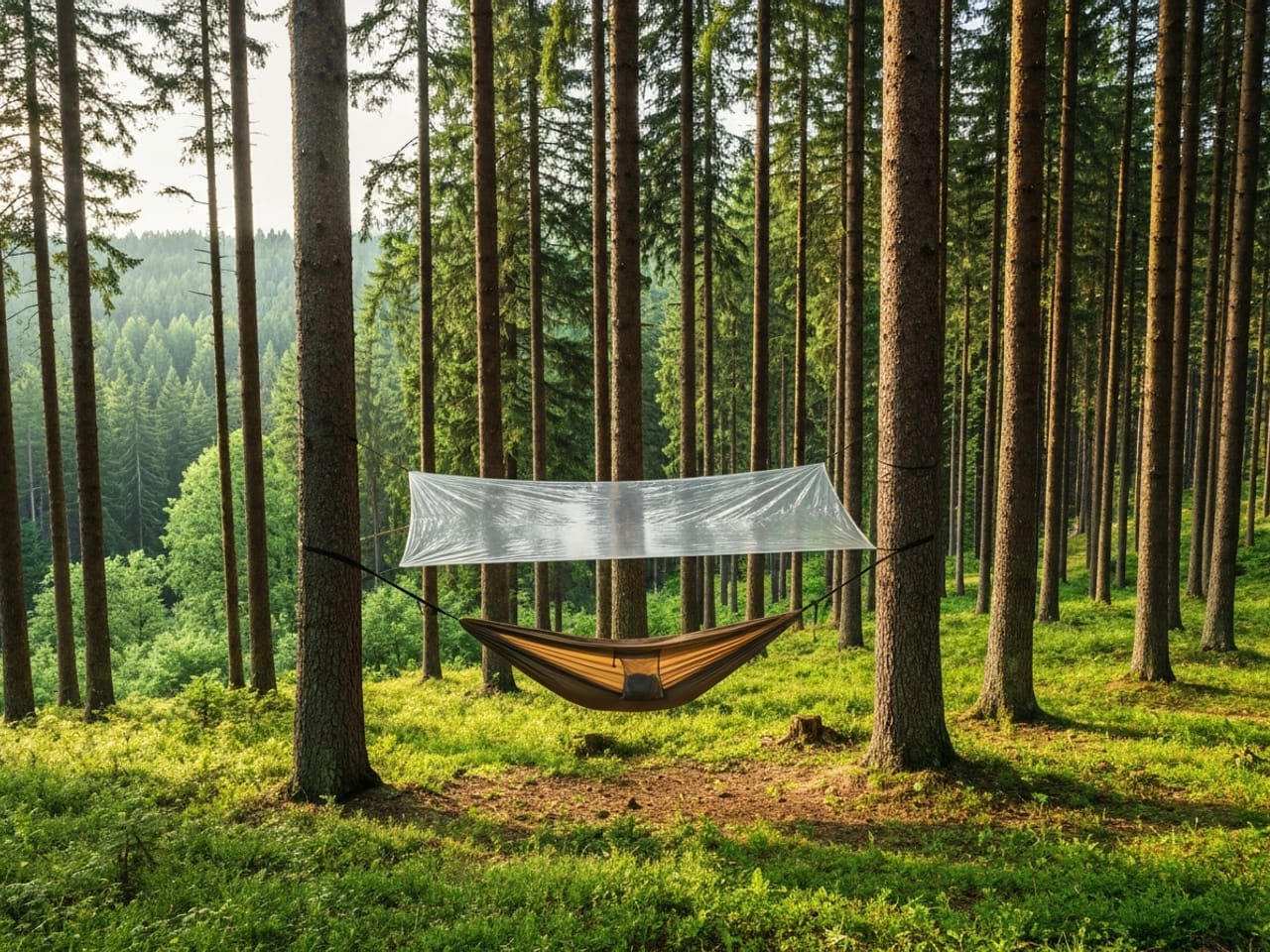
A bushcraft hammock is not a backyard lounger. You need a built-in bug net, a base that pairs with a tarp and holds a pad against the cold, and tree-friendly suspension you can pitch on real ground: rooted, sloped, or wet. That rules out most of what shows up in a hammock search.
Who this guide is for
People sleeping in the backcountry off the ground, not stringing a hammock between two porch posts. If you camp where the ground is wet, rooted, or slanted, a hammock solves the problem a tent cannot. For the roof that goes over it, read our best bushcraft tarp guide and the walkthrough on a bushcraft tarp shelter.
What to look for
Bug net
An integrated net that zips shut around you is the difference between sleeping and being eaten. Look for a net you can also unzip and roll away in daylight so the hammock doubles as an open seat. Add-on nets that drape over a bare hammock sag onto your face and let bugs in at the seams.
Fabric and weight limit
Most camping hammocks use 40D to 70D ripstop nylon. Lighter 40D packs smaller; 70D shrugs off rougher handling. Check the rated weight limit against your loaded body weight, not your bare weight, since a pack and quilt add up. Double-layer bases add durability and a sleeve for a pad.
Suspension and tree straps
Thin cord cuts into bark and kills trees over a season of use. Wide 1-inch or 1.5-inch tree straps spread the load and leave no mark, which is the whole point of camping this way. Whoopie slings let you fine-tune sag without knots. A structural ridgeline sets a repeatable hang angle every time.
Staying warm
Air moving under a hammock strips heat from your back faster than the ground ever would. A sleeping pad inside a double-layer base helps, but below roughly 60F an underquilt hung outside the hammock is the real fix. Plan for cold from below before you plan for cold from above.
In the field: all five hammocks
DD Frontline, ~$90
The bushcraft default for a reason. Built-in bug net, double-layer breathable base, spreader poles, and 10m of webbing all come in the bag, so it works out of the box. The body is 8.8 by 4.6 feet with a 275 lb limit. Unzip both net sides and roll them away, and it becomes an open lounger. Add a tarp and proper tree straps and you have a full backcountry sleep system.
Warbonnet Blackbird XLC, ~$200+
The upgrade pick for people who live in a hammock. The asymmetric cut and built-in footbox let you lie flatter and diagonal, and the shelf pocket keeps a headlamp and phone off your chest. 40D or 70D nylon depending on layer choice, an 111-inch structural ridgeline, and a max load up to 350 lb on the heavyweight single. The full-perimeter zip net detaches completely when you want it gone.
Hennessy Expedition Asym Zip, ~$200 system
A complete hang in one purchase: hammock, attached bug net, detachable rain fly, and suspension. The asymmetric shape and structural ridgeline give a near-flat lie, and the side zip entry beats the old bottom-entry design. Rated to 250 lb. If you want one box that covers hammock and tarp together, this is the cleanest answer here.
ENO DoubleNest, ~$75
The budget open hammock. 70D nylon, a 400 lb weight limit, and a roomy 9.5 by 6.3 foot body that packs to the size of a grapefruit. There is no bug net and no straps in the box, so it is a starting point, not a finished system. Good as a first hammock or a warm-weather, low-bug lounger before you commit to a netted setup.
Kammok Roo Double, ~$100
A tough recycled-nylon open hammock with a 500 lb weight limit, one of the highest here, on 40D diamond ripstop that packs to about 17 oz. Like the ENO it ships without a net, so pair it with a bug net and tree straps for real trips. The high load rating and durable fabric make it a solid two-season base to build a system around.
How to choose
- Want one box that just works: DD Frontline, or the Hennessy if you want the tarp included too.
- Sleeping in it all summer: Warbonnet Blackbird XLC for the flatter lie and gear shelf.
- On a budget or building your own system: ENO DoubleNest or Kammok Roo, then add a net and straps.
- Always match the hammock to a tarp and a plan for cold from below. See our bushcraft shelter guide for how the pieces fit.
- Scout your trees before dark. Two solid trunks 12 to 15 feet apart is the target, covered in how to choose a campsite.
The hammock is the easy part. The bug net, the tarp, and the underquilt are what decide whether you actually sleep.
Should you buy it?
Complete out of the box: DD Frontline. Summer home in the trees: Warbonnet Blackbird XLC. One purchase with tarp included: Hennessy Expedition. Building your own kit on a budget: ENO DoubleNest or Kammok Roo, plus a net and straps. Whichever you pick, carry it alongside the right bushcraft backpack and browse the rest of the shelter and tarps gear.
Affiliate disclosure: Some links in this guide are affiliate links. If you buy through them we may earn a small commission, at no extra cost to you. It does not influence which products we recommend. Read our methodology.