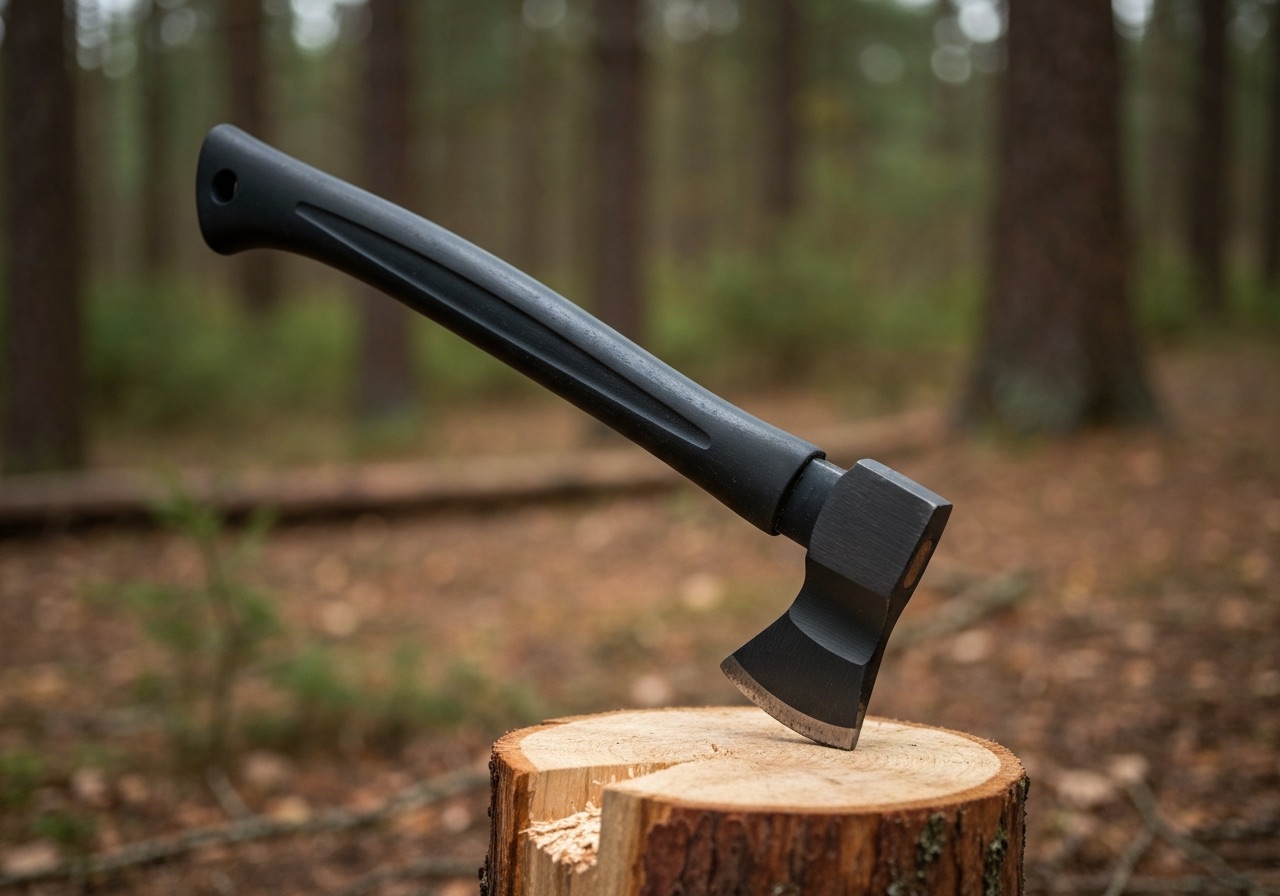
The Fiskars X7 is a 14-inch hatchet built around one idea: split kindling cheaply and survive being thrown in the back of a truck for a decade. The forged steel head and bonded FiberComp handle make it close to unbreakable for the money. It is not a carving tool and the handle cannot be replaced, but at roughly $42 it does the camp-wood job most people actually buy a hatchet for.
Who it's for
The X7 is right for the camper, weekend tent user, or backyard fire-builder who wants a hatchet to split kindling and small rounds without worrying about it. It is a tool you can lend, leave outside, and abuse without much guilt at this price. It is the wrong tool for traditional bushcraft, where you want a wood-handled axe you can re-haft and a head geometry suited to carving and limbing. For where it sits against other small axes, see the best hatchet for bushcraft guide and the broader best bushcraft axe guide.
How we assessed
This assessment is based on published Fiskars specifications, retailer listings, and analysis of user reviews and independent field reports across multiple platforms. The X7 has been sold for years and has a large, consistent data set on durability, edge behavior, and splitting performance. We do not claim personal field hours or lab measurement here, so see our methodology for how we weigh research-based reviews.
In the field
Splitting performance
The X7 is built to split, and that is where it earns its keep. The short, wide wedge head pops the grain apart with less penetration than a thinner traditional bit, which suits kindling work. Reviewers report it splitting 2 to 3 inch softwood rounds cleanly in a single stroke, and pushing into 4 to 5 inch pieces with reasonable effort. The 14-inch handle is the limit here. It gives one-handed control and easy belt or pack carry, but the short length means less head speed and less leverage than a full-size axe, so larger or knotty hardwood rounds become slow going.
The FiberComp handle: durability versus non-repairability
The handle is the X7's headline feature and its main compromise at the same time. FiberComp is a hollow nylon-and-glass-fiber composite that is genuinely close to indestructible. Owners report using it as a pry bar on twisted grain and even backing a vehicle over the handle with no lasting damage. The catch is that the head is insert-molded onto the handle as one bonded unit. There is no eye, no wedge, no way to re-haft it. A wooden-handled axe that breaks gets a new handle and keeps working for another twenty years. When an X7 fails, the whole tool is finished. For most buyers that trade is fine, because the handle rarely breaks. For anyone who values a field-repairable tool, it is a real mark against it.
Edge retention and the coating
The head wears a low-friction coating that helps it release from green wood and resists rust, and the factory edge arrives usefully sharp at this price, ground to a roughly 30-degree bevel. The honest limitation is the steel. Fiskars runs a softer head than premium European axes, so the edge dulls faster under hard use, and several owners report spending 15 to 30 minutes with a file to bring a neglected edge back. The wide wedge profile also works against fine work. It tends to break tinder strands off short, so feather sticks and detailed carving are awkward compared with a flatter bushcraft grind.
Compared to alternatives
vs. Gransfors Bruks Small Forest Axe (~$185): These are not really the same tool. The Gransfors is a hand-forged, convex-ground carry axe with a 19-inch hickory handle you can re-haft and a head built for chopping, limbing, and carving as well as splitting. The X7 is a one-job kindling splitter that costs roughly a fifth as much and cannot be repaired. If you want a lifetime bushcraft axe, the Gransfors is the answer. Full writeup in our Gransfors Bruks Small Forest Axe review. If you want a cheap, tough splitter and nothing more, the X7 wins on price and abuse tolerance.
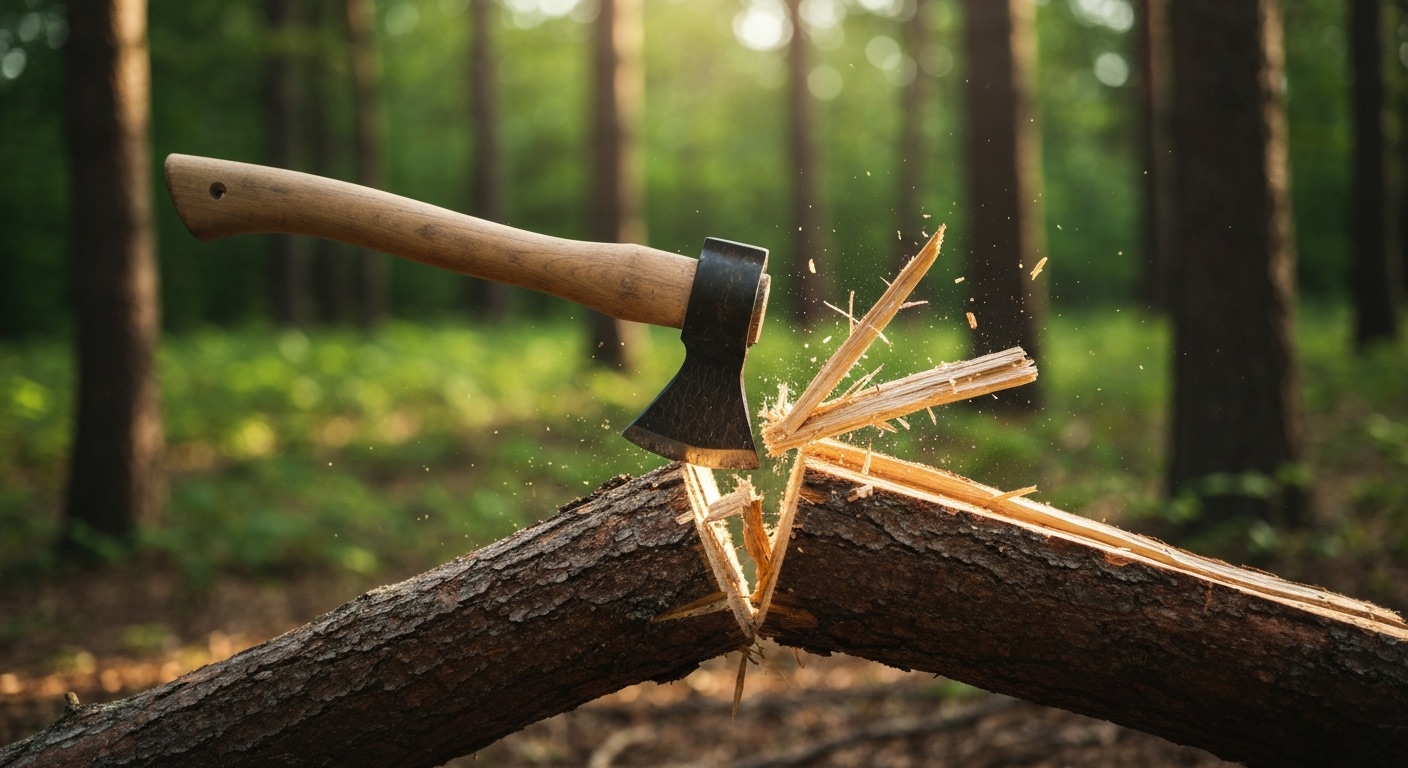
vs. a traditional wood-handled hatchet (~$40-60): A budget hickory-handled hatchet in the same price range gives you a flatter grind that carves better and a handle you can replace when it eventually breaks or checks. The trade is fragility and maintenance. Wood handles can crack on an overstrike, need occasional oiling, and demand more care than the X7's molded composite. Choose the wood handle if re-haftability and carving matter to you, and the X7 if you want to never think about handle care again.
Should you buy it?
Yes, if you want a cheap, tough hatchet to split kindling and light camp wood and you do not care that it cannot be repaired. For about $42 the X7 does that job well and shrugs off abuse that would destroy most tools. Buy one, keep it in the truck or the wood box, and use it without a second thought.
No, if you are after a traditional bushcraft axe. The bonded handle, the softer steel, and the fat splitting wedge all point away from carving and field repair. For that, spend up to the Gransfors Small Forest Axe or compare the field against our best hatchet for bushcraft guide.
Affiliate disclosure: Links to retailers in this review are affiliate links. If you buy through them we may earn a small commission, at no extra cost to you. Affiliate revenue does not influence our rating. Read our methodology.