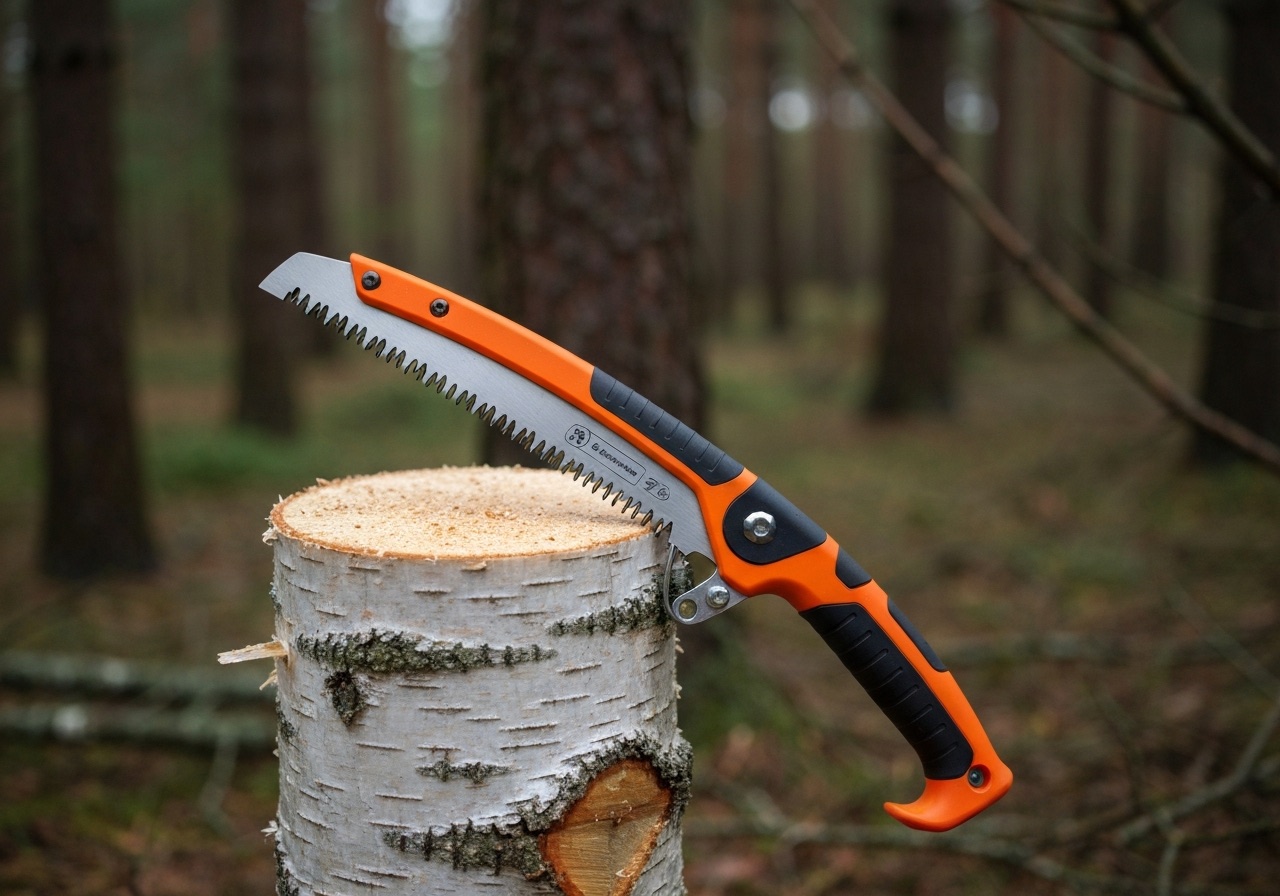
The Bahco Laplander 396-LAP is a roughly $30 folding saw from Sweden that became the default carry across the bushcraft world. The reason is simple: a 7.5-inch, 7 TPI hardpoint blade that cuts on both strokes will process shelter poles and firewood faster and far more safely than batoning a knife, and it folds flat into a pocket.
Who it's for
The Laplander is right for two kinds of buyer: people putting together their first overnight kit, and experienced campers who want one light saw that handles everything on a 1-3 night trip. It limbs trails, bucks downed wood for the fire, and cuts the poles for a tarp ridgeline or a frame shelter. If you carry a knife and want the one tool that doubles your wood-processing capability for almost no weight, this is it.
It pairs naturally with the rest of a basic loadout. See the bushcraft starter kit for where a folding saw sits in your first setup, and the essential bushcraft gear list for how it works alongside a knife and axe.
How we assessed
This assessment is based on published Bahco specifications, manufacturer data, and analysis of several thousand user reviews and field reports across multiple platforms. The Laplander has been on the market for years and has an unusually large and consistent data set. We do not claim personal field testing, see our methodology.
In the field
Cutting performance and the 7 TPI blade
The 7.5-inch blade runs at 7 teeth per inch with Bahco's XT toothing. The teeth are hardpoint, meaning the tips are induction-hardened so they stay sharp far longer than a standard saw, and the blade cuts on both the pull and the push stroke. In practice that means fast, aggressive cutting. User reports consistently describe clearing wrist-thick limbs in a handful of strokes, and branches in the 3 to 4 inch range come apart with steady, unhurried passes. The 7 TPI count is the sensible middle ground: coarse enough to clear chips and move through wood quickly, fine enough that it does not skip or chatter on smaller stock.
The blade is designed for green and dry wood, and it also handles plastic and bone, which is why the same saw turns up in pruning, camping, and hunting kits. For the wood-processing a shelter and a fire actually demand, it is more capable than its size suggests. For where it fits among other saws, see the best folding saw for bushcraft guide.
The locking mechanism and safety
The Laplander locks in two positions: fully open for cutting, and fully folded for carry. The open lock holds the blade rigid with no wobble, which matters because a saw that flexes at the pivot wanders and binds. The folded lock is the safety feature that earns its keep: the blade will not flop open in a pack or a pocket, so you are not reaching past exposed teeth. To close it you release the lock at the pivot and fold the blade back into the handle channel. The two-component plastic handle gives a secure grip in wet conditions and there are no hot spots during the short bursts of sawing most camp tasks need.
Blade life, replaceability, and green-wood gumming
Two honest limits. First, the hardpoint teeth that hold their edge so well cannot be resharpened, induction-hardened tips do not take a file. The blade lasts a long time under normal trip use, but when it finally dulls you replace the whole saw rather than the blade. At this price that is a reasonable trade, just know it going in. Second, green sappy wood is the saw's weak spot. Cutting live or wet wood packs sap and damp fibre into the tooth gullets, the saw gums up, and it bogs down. Even dead standing wood can be soaked on the outer rings, so a branch that looks dry can still clog the teeth. The Laplander is at its best in dead, dry wood. Plan your firewood around that and it rarely complains.
Compared to alternatives
vs. Silky Gomboy / Pocketboy: The Silky folding saws cut faster and finer than the Laplander, with smoother blades and replaceable teeth you can swap rather than retire. They are genuinely sharper tools. They also cost two to three times as much and the fine Silky blades can be more delicate under rough lateral loading. The Laplander is the better-value workhorse; the Silky is the upgrade once you saw often enough to feel the difference.
vs. a bow saw or Sven saw: A bow saw or a folding Sven saw cuts larger-diameter wood faster than any folder, because the long blade and rigid frame let you take full strokes. That is the tool for processing a real woodpile at a base camp. But both are bulkier and the bow saw is awkward to pack. For a saw that lives in a pocket on a moving trip, the Laplander wins on portability every time.
Should you buy it?
Yes, for most people. The Laplander is the correct first folding saw for the large majority of campers and bushcrafters. It cuts well, folds small, weighs little, and the safety lock makes it pleasant to carry. At around $30 it is cheap enough that the non-resharpenable blade is a fair trade rather than a flaw. For building out the shelter side of your skills, the bushcraft shelter guide shows the kind of pole-cutting this saw is built for.
Don't buy it as your only tool if you regularly process large-diameter rounds at a fixed camp, get a bow saw or Sven saw for that. Don't expect it to power through green, sappy wood without complaint. For everyone packing light for a few nights out, this is the right call.
Affiliate disclosure: Links to retailers in this review are affiliate links, if you buy through them we may earn a small commission, at no extra cost to you. Affiliate revenue does not influence our rating. Read our methodology.